The shelving that came with your garage was probably an afterthought. A few metal brackets, some wire racks rated for light loads, maybe a freestanding unit that wobbles when you set a cooler on it. For the first year it looks fine. Then the bikes move in, the camping bins stack up, and suddenly you have a wall of stuff that is technically stored but practically inaccessible.
That is the moment most Puget Sound homeowners realize the problem was never the clutter. It was the shelving.
Key takeaways
- Shelving rated for real weight, up to 1,000 pounds per four-foot section, changes what you can store and how safely.
- Wall-mounted systems free up floor space and reduce the risk of a rack tipping or shifting during a quake.
- The right depth matters: 16-inch shelves for tools and small bins, 24 or 32 inches for bulkier gear and large totes.
- Shelving works best as part of a coordinated system, not a standalone fix.
- A free in-home consultation with a 3D model lets you see the layout before anything is installed.
The Weight Problem Nobody Talks About
Consumer-grade shelving is rated by the manufacturer for ideal conditions. Evenly distributed load, dry environment, light use. Your garage is none of those things.
A single large Rubbermaid tote packed with holiday décor can weigh considerably more than you expect. Stack three of them on a shelf that flexes, and you have a problem waiting for a Cascadia subduction zone aftershock to find it. The Pacific Northwest Seismic Network has documented that the Puget Sound region faces significant seismic risk, and open racks loaded with heavy bins are exactly the kind of hazard that becomes dangerous when the ground moves.
Monkey Bars shelving is built from powder-coated steel and rated for up to 1,000 pounds per four-foot section. That figure covers the real loads people put on garage shelves: coolers, bulk water, tool sets, sports gear, and the kind of large plastic bins that become permanent fixtures once they go up. The steel does not flex. The rating is not theoretical.
Why Depth Is a Decision, Not a Detail
Most shelving comes in one depth and you work around it. That is backwards.
A 16-inch shelf is the right call for tools, garden chemicals, and smaller bins you need to grab quickly. A 24-inch shelf suits medium totes and sports equipment. At 32 inches, you have room for large storage containers, bulk paper goods, and camping gear that would otherwise occupy prime floor space.
Getting the depth wrong means either wasted space on shelves that are too shallow for what you own, or bins that overhang the edge and create a hazard. We size each shelf run to what you are storing, in custom widths, so the system fits your wall and your gear rather than forcing you to adapt around it.
Inverted 24-inch shelves add another option. Mounted below standard runs, they put frequently accessed items at a reachable height without forcing you to reorganize an entire wall section.
Open Shelving and Closed Cabinets Work Together
A common mistake is treating shelving and cabinets as an either/or choice. They solve different problems.
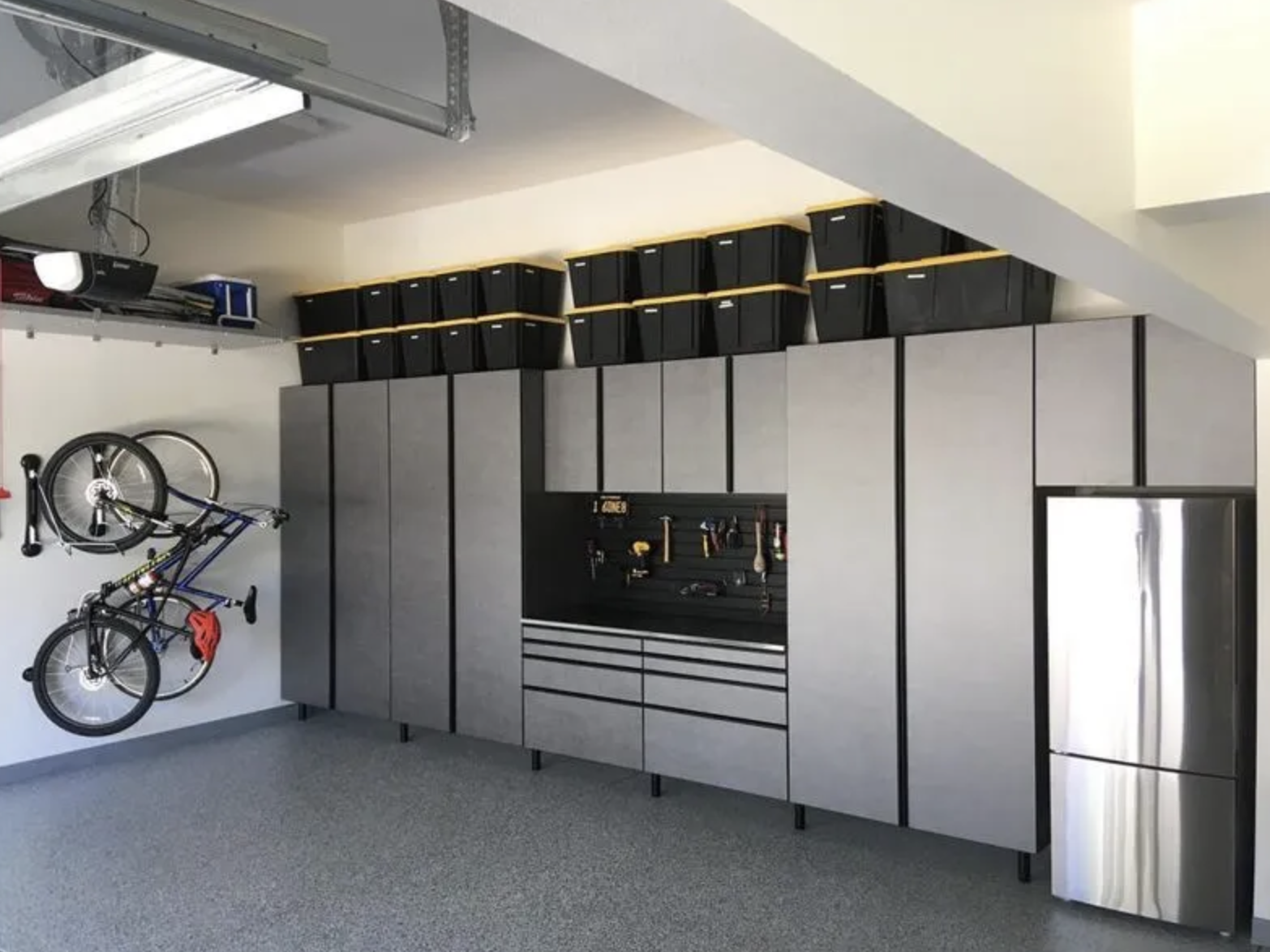
Garage cabinets hide the things you do not want visible: chemicals, automotive supplies, power tools, household overflow. They are mounted off the floor, which keeps them away from the damp concrete that is a fact of life in Western Washington winters.
Open shelving works best for the things you need to see and reach. Bins are labeled and visible. Coolers are accessible without opening a door. Sports gear is in plain sight before a Saturday morning trail run on the Burke-Gilman.
The two systems work together. Plan them as a coordinated layout and the garage stops feeling like a storage unit and starts functioning like a room. See how that coordination comes together in our Kirkland full garage upgrade, where shelving and cabinets share the same wall without competing for space.
Slatwall Handles What Shelves Cannot
There is a category of gear that does not belong on a shelf at all. Bikes, paddles, rakes, brooms, extension cords, garden hoses. These items lean, tangle, and fall. Shelving does not solve them.
Garage slatwall gives that gear a home on the wall, using hooks, baskets, and clips that you can reposition as your collection changes. A family in Bothell with four bikes and a mix of seasonal outdoor gear needs a different hook configuration in January than they do in July. Slatwall accommodates that without any new hardware or permanent changes.
The practical move is to put shelving where you need horizontal load-bearing capacity and slatwall where you need flexible, vertical organization. Use both and very little ends up on the floor.
Overhead Storage Frees the Walls You Need Most
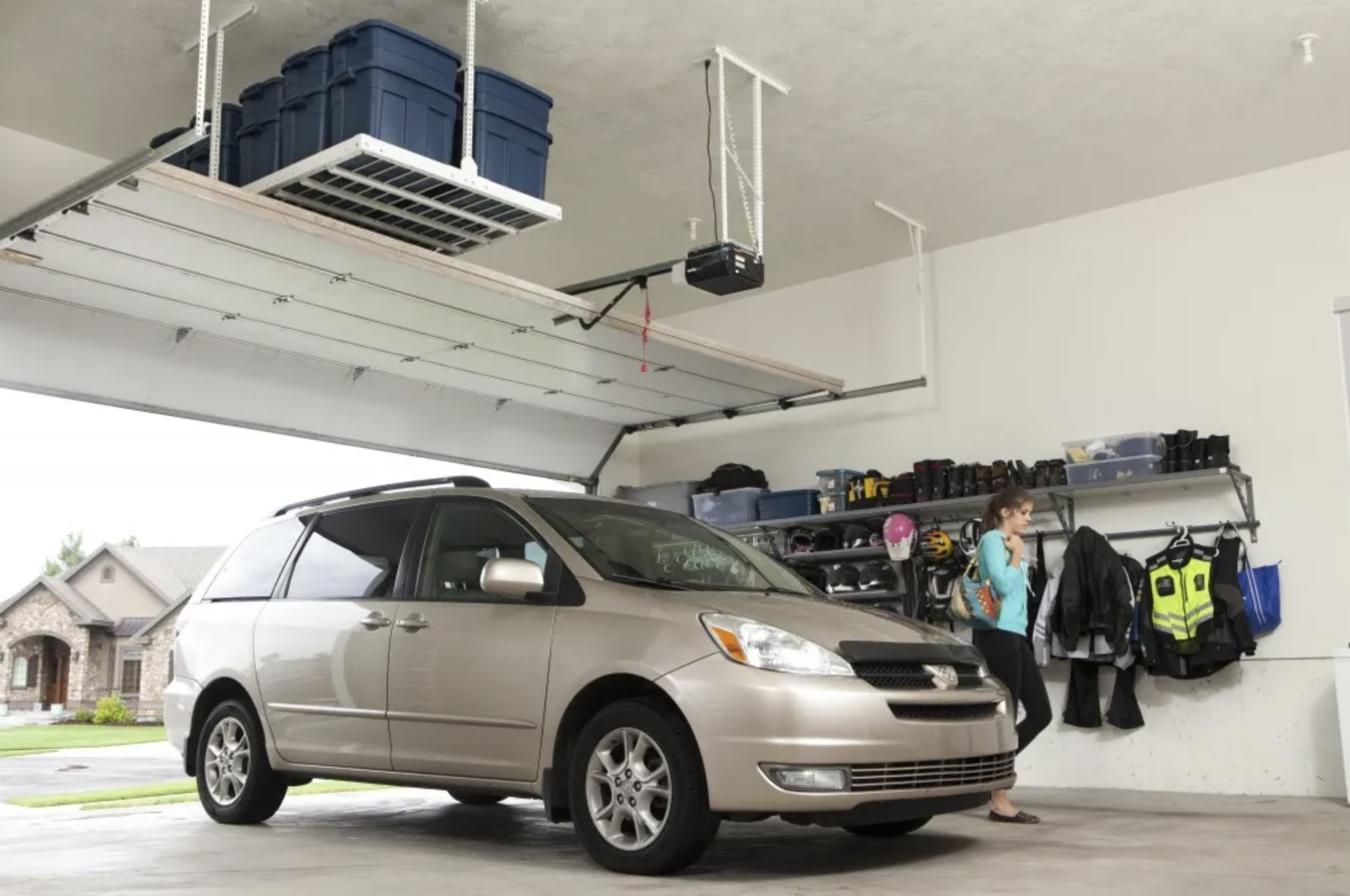
If your shelving walls are already at capacity, the ceiling is the next place to look. Stationary overhead racks hold up to 750 pounds hung from the ceiling joists, or 1,000 pounds with one side mounted to the wall. Motorized racks hold 350 pounds and lower by phone app, which matters when you are trying to get the ski bags down in October without recruiting someone to spot you on a ladder.
Overhead storage is best suited for bins and gear you use a few times a year: holiday decorations, camping equipment, luggage, off-season sporting goods. Moving that category to the ceiling clears the shelving walls for the things you use weekly, which is where the real daily convenience comes from.
A System Designed Around How You Use the Space
Shelving sold by the linear foot at a home improvement store is designed for nobody in particular. The result is a garage that holds things but does not support any routine.
A designed system starts with how you use the garage. Where do you park? Which wall do you walk past every morning? What do you grab on the way out the door for a weekend ride or a soccer practice? What do you need to store high because you have young kids?
We handle the 3D design after the in-home consultation, usually within 24 hours, so you can see exactly where every shelf run, cabinet bank, and slatwall section will land before anything goes up. That 3D model is not a sales brochure. It is a working layout you can review, adjust, and approve before the installation crew shows up.
Installation is included in all pricing. Most jobs finish in a day.
Questions homeowners ask
How much weight can garage shelving hold?
Our Monkey Bars shelving is rated for up to 1,000 pounds per four-foot section. That covers the heaviest real-world loads most homeowners put on garage shelves: large plastic storage totes, bulk supplies, coolers, and heavy tool sets. The powder-coated steel construction does not flex under load, which matters both for daily use and for stability during seismic events common to the Puget Sound region.
What shelf depth do I need for my garage?
It depends on what you are storing. We offer 16, 24, and 32-inch depths. Sixteen inches works well for tools, chemicals, and smaller bins. Twenty-four inches suits medium totes and sports equipment. Thirty-two inches accommodates large storage containers and bulky camping gear. We size each shelf to match what you are storing rather than defaulting to one depth across the entire garage.
Should I combine shelving with garage cabinets?
Yes, for most garages the best outcome comes from using both. Open shelving is ideal for bins, containers, and gear you need to see and access frequently. Cabinets handle items you want concealed or secured, like chemicals, automotive fluids, and power tools. Planned together as a coordinated layout, they give every category of storage a logical home and make the garage feel finished rather than improvised.
How long does shelving installation take?
Most installs finish in one day, and some complete in a few hours depending on the scope of the project. All installation is included in the pricing, so there is nothing to arrange separately. After your in-home consultation, you will receive a detailed estimate and a 3D model of the layout, usually within 24 hours, so you know exactly what to expect before the work begins.
If you are ready to see what a properly designed shelving system looks like in your garage, schedule a free consultation. We bring samples to your driveway, build the layout in 3D, and handle everything from design through installation.